BIA Bradesco
Category
Financial Services · Conversational Design
BIA Bradesco was one of the bank’s first large-scale conversational AI initiatives. The project focused on improving how users interacted with AI while simultaneously understanding why many users consumed Bradesco services without becoming account holders. Through UX research, conversation design, and behavioral analysis, we explored how trust, language, and financial behavior shaped digital experiences.

This project combined conversational UX research and behavioral analysis within one of Brazil’s largest financial ecosystems. While BIA was evolving as an AI assistant, users still struggled to differentiate conversational AI from traditional IVR systems. At the same time, another initiative investigated why many users trusted Bradesco services without opening accounts.
The project involved interviews, usability testing, tone-of-voice validation, UX writing, benchmarking, and journey mapping.
Exploring non-customer behavior and building trust through conversational AI.
The goal of the project was to make conversational interactions feel clearer, more trustworthy, and emotionally accessible at a time when most users still felt unfamiliar with AI-driven experiences. Beyond improving BIA’s communication flows, the initiative also aimed to better understand users who maintained relationships with Bradesco services without becoming account holders. By reducing friction, simplifying language, and creating a more supportive conversational tone, the project sought to strengthen trust between users and the bank while making digital interactions feel more natural, transparent, and easier to navigate.

Challenge
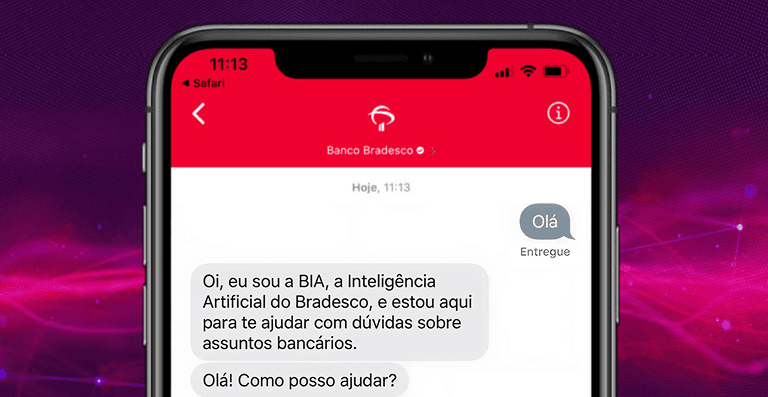
Users expected empathy from AI while still interacting with BIA as if it were a traditional automated system. The challenge involved balancing conversational realism, operational limitations, banking trust, and behavioral expectations. Additionally, the bank needed to understand why users consumed services without fully entering the banking ecosystem.
Results
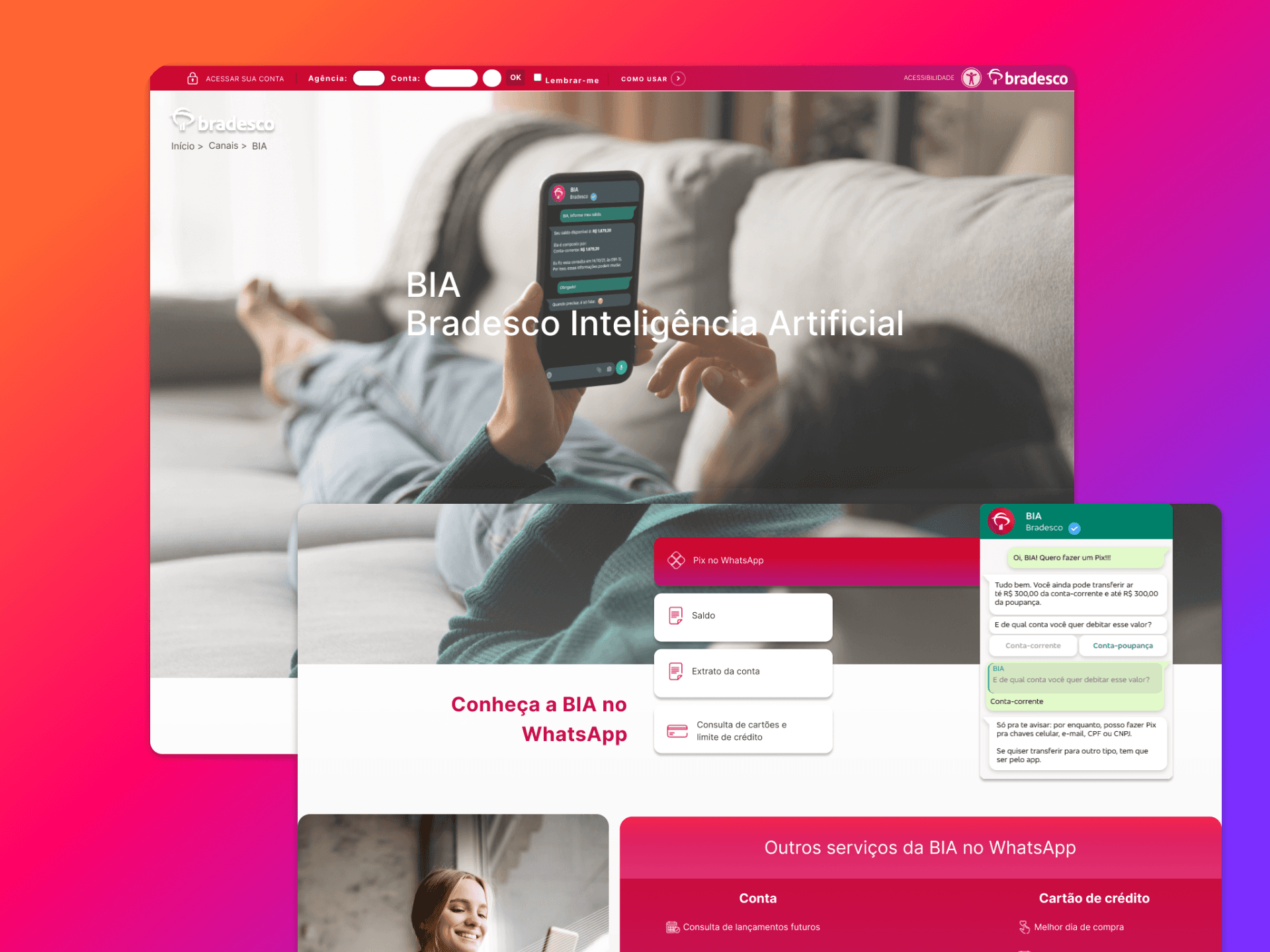
The project improved alignment between conversational behavior and user expectations by introducing clearer interaction patterns, controlled vocabulary systems, and more accessible communication flows. The research also helped reposition non-account holders as valuable relationship users rather than failed conversions, influencing how the bank approached peripheral engagement. From a UX strategy perspective, the initiative reinforced the importance of behavioral analysis, conversational trust, and cognitive load reduction within enterprise financial systems.
Final Reflection
As product and experience designers, we need to fall in love with the problem more than the solution itself. During the investigative process, the right direction often reveals itself through user behavior, constraints, and context. Measuring success in a product goes far beyond delivering polished interfaces. It’s about creating real alignment between the business, the product, and the people who will actually use it every day.
Keywords
UX Research · Conversational Design · UX Writing · AI Experience · Enterprise UX · Financial Services · Behavioral Analysis · Service Design · Trust Systems · Human-Centered AI