Pix Backoffice
Category
Complex Financial Systems
Redesign of Safra’s internal Pix operational ecosystem, focused on improving information architecture, workflow predictability, and operational scalability. The project modernized a fragmented legacy system used by technical teams connected to BACEN, fraud, accounting, DICT, and transaction messaging operations.
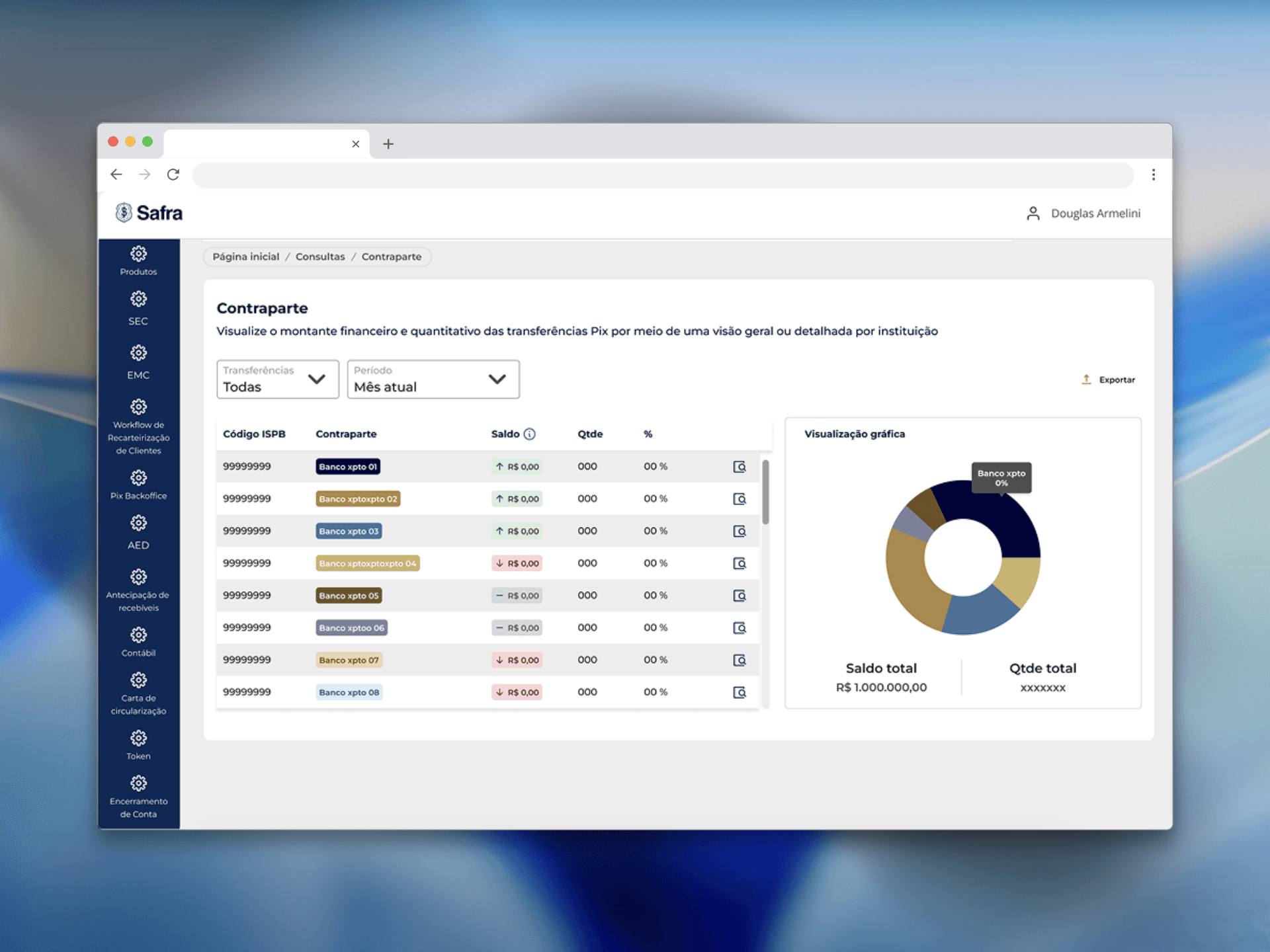
Pix Backoffice was a large-scale modernization project focused on redesigning Safra’s internal Pix operational ecosystem. The platform supported critical workflows connected to BACEN communication, accounting operations, fraud analysis, DICT management, contingencies, and transaction messaging.
Previously dependent on a fragmented white label solution, the system had a high learning curve, inconsistent operational patterns, and strong dependency on senior operators. The redesign focused on improving operational clarity, reducing cognitive load, and creating a more scalable experience without disrupting the workflows teams already relied on daily.
As Lead Product Designer, I was responsible for UX strategy, information architecture, research, interface design, prototyping, documentation, and implementation follow-up alongside engineering and QA teams.
Using learning curves as a foundation to modernize complex financial operations without breaking operational trust.
The project goal envolved create a more reliable and scalable operational experience for internal Pix teams by reducing operational dependency, improving workflow predictability, and simplifying critical financial processes inside a highly complex ecosystem.
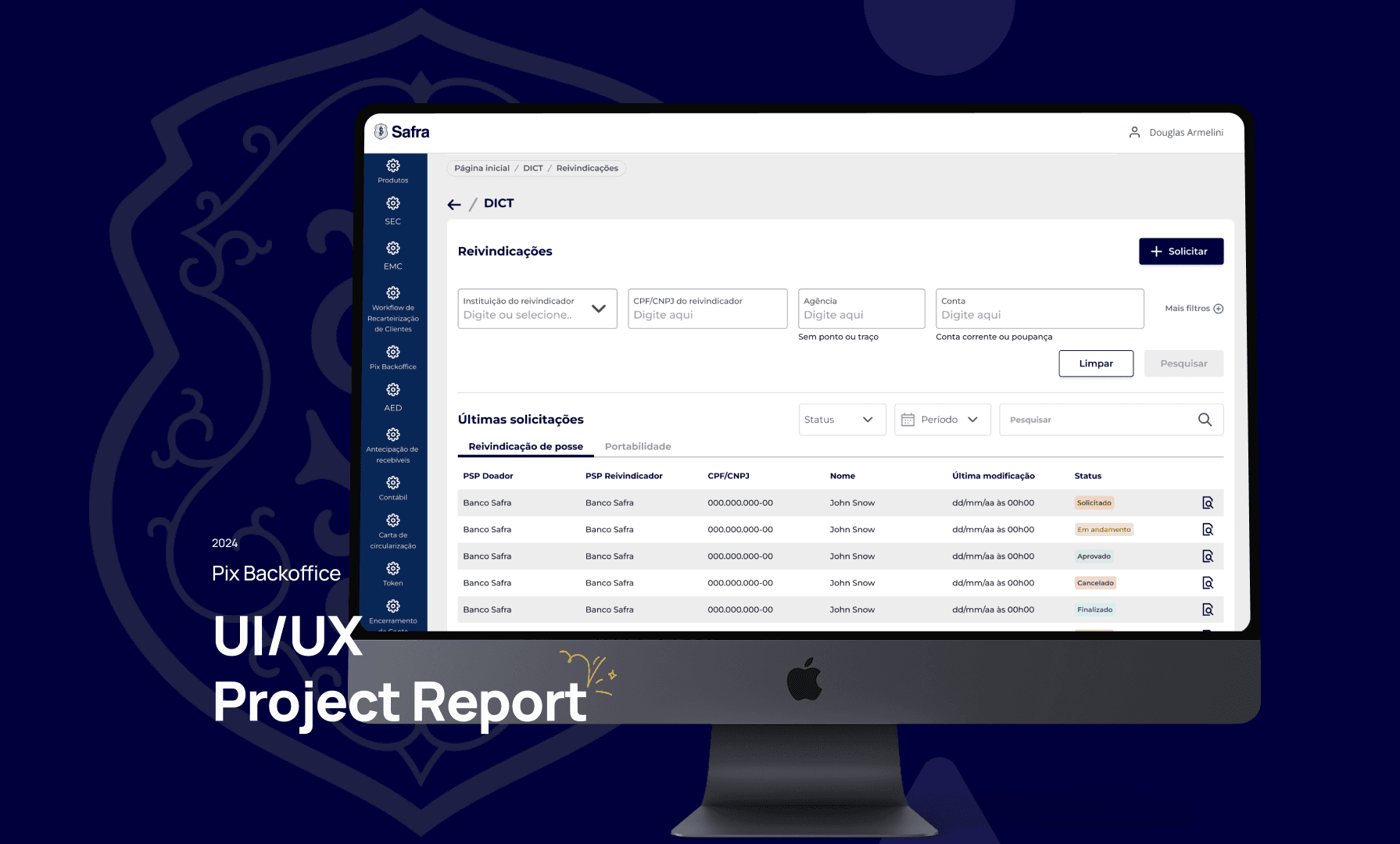
Challenge
The biggest challenge was balancing modernization with operational familiarity inside a critical financial environment.
The previous platform had fragmented architecture, duplicated information, inconsistent workflows, and a strong dependency on informal operational knowledge. New operators could take months to fully understand the system, increasing onboarding complexity and operational risk.
At the same time, the redesign could not compromise the stability of workflows already used daily by technical teams connected to BACEN operations, accounting processes, fraud monitoring, and transaction messaging.
The project required improving usability and scalability while preserving the operational logic users already trusted.

Results
The redesign helped transform a fragmented and highly operational system into a more structured and scalable Pix ecosystem aligned with Safra’s internal operations.
One of the main focuses of the project was reducing the platform’s learning curve. New operators previously needed an average of two to three months to fully understand the operational logic of the system, largely due to inconsistent workflows, duplicated information, excessive acronyms, and dependency on informal knowledge shared between teams.
By reorganizing the information architecture, improving operational predictability, and creating clearer visual patterns, the new experience reduced cognitive overload and made workflows easier to understand and navigate, especially for newer operators.
The project was heavily influenced by principles connected to Tesler’s Law, understanding that complexity in financial systems cannot simply disappear. Instead of transferring operational complexity entirely to users, the redesign focused on organizing, structuring, and distributing complexity more intelligently through navigation, hierarchy, permission logic, visual feedback, and clearer operational flows.
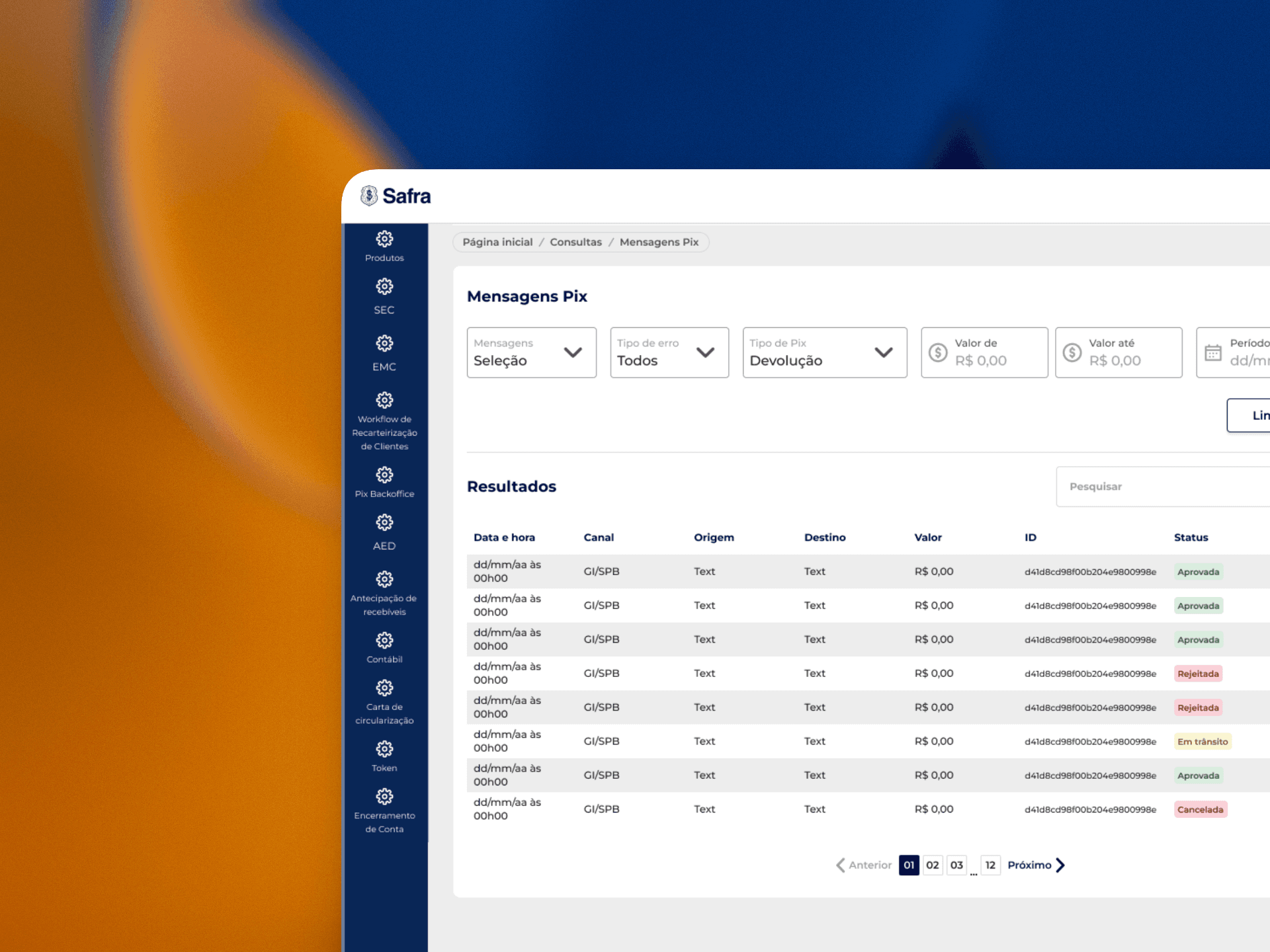
Critical areas such as Mensageria Pix and Contraparte analysis were simplified through:
clearer operational hierarchy
grouped filters and actions
improved status visibility
graphical operational visualization
reduction of acronym dependency through accessible legends
more predictable interactions
The redesign also supported Safra’s transition away from a fragmented white label ecosystem into a more integrated operational structure, helping improve workflow consistency, scalability, and long term operational reliability.